


tahi kin – Phoebe Hart
Phoebe is a Somatic Facialist who is devoted to helping people nurture a deeper, more loving relationship with their face. Her work is grounded in the Face Up Method and enhanced by Sola’s signature approach to skin and the nervous system, honouring the connection between skin, emotion, and whole-body wellbeing.
With over a decade of experience in somatic practices, Phoebe sees the face as part of the body’s wider ecosystem. She offers personalised touch and guidance to release tension, support lymphatic flow, nurture a resilient skin barrier, and a naturally sculpted look - integrating somatic cues with restorative facial massage to tailor every treatment to each client’s lifestyle, environment, and overall well being.

What does a typical day look like for you right now?
My days are intentionally slower than they’ve been in the past. Over the last year, I was balancing a full-time marketing role alongside building my facial practice, and my body let me know that pace wasn’t sustainable.
Since stepping away to focus solely on my work as a facialist, I’ve been recalibrating. My workday now begins around midday, which allows space for a gentle morning. I wake slowly, walk on the beach to receive natural light, nourish myself properly, and take time to settle into my body before holding space for others.
I’m very much in the process of unravelling the identity of being a “busy” woman. Learning that slowness is not laziness, but a necessity. And reminding myself daily that I am safe in this new rhythm. .
In your work with somatics, touch and sound, what patterns do you see the body holding — and how do you gently invite it to soften?
Many of the women I see are carrying an immense mental and physical load. They are working, caregiving, managing households, holding emotional space for others, often without being held themselves.
This usually presents as tight shoulders, a clenched jaw, restricted breath. There is often a resistance to fully relaxing, as though the body is bracing and ready for the next thing to happen.
I invite softening through breath cues, a grounded and calming tone when I speak, and slow, rhythmic touch. The aim is not to force relaxation, but to create safety so that the body remembers that it can. When the nervous system senses safety, the body begins to unwind organically. Sometimes that looks like a deep sigh. Sometimes it’s a small twitch as stored tension releases. Sometimes it’s falling asleep.
The body already knows how to soften. It just needs the right conditions.

We speak often about skin as something to be cared for gently, not corrected. How have you seen touch support emotional release, regulation and a return to calm?
When the face is approached with care rather than correction, something usually shifts. I love to remind people that my treatments aren’t about fixing anything, and rather about returning to that belief that you are already enough, and that your body is doing all that it can to take care of you.
We hold so much emotion in the face - stress, restraint, performance. Attuned, intentional touch communicates safety directly to these holding patterns. I’ve witnessed tears arise unexpectedly. I’ve witnessed complete stillness. I’ve witnessed women wake from a treatment and say they haven’t felt that rested in years.
Touch offered without an agenda becomes permission - permission to feel, to soften, to return to yourself.
Many women move through their days in a constant state of doing. What does “coming home to yourself” actually feel like in the body?
It feels like a big exhale, when you finally realise you’ve been holding your breath.
Coming home to yourself isn’t a huge moment. It’s subtle … the shoulders drop, the tongue rests softly in the mouth, the belly unclenches, the eyes lose their vigilance. It’s a feeling that you’ve taken off all of the identities that you have to uphold throughout your day and let go of performing or striving for a moment.
What would you remind someone who feels too busy or overwhelmed to prioritise themselves?
I remind myself of this often: your worth is not measured by your productivity.
You are not more valuable when you are exhausted. You are not more deserving when you are depleted. Rest is not indulgent, it is essential.
Just as a car cannot run without fuel, you cannot continue giving without being nourished. Taking care of yourself is not selfish; it is sustainable. It is how we remain soft, present, and resilient in the long term.

We are deeply rooted in the wisdom of nature — in native botanicals grown here in Aotearoa, in rituals shaped by land and season. Do you weave elements of the natural world into your sessions? Whether through plant oils, sound, breath, or simply the feeling of earth beneath your feet — why do these elements matter to the nervous system, and to the way we heal?
The breath, the pace of touch, and the soundscape within my treatment space are all intentional. Most people arrive having not taken a single conscious breath all day. The first invitation is simply to slow down.
The second invitation is to feel connection through touch. To lend off of my nervous system throughout the treatment as a space of co-regulation and to really land into your body in a way that takes you into rest, not panic.
What is your go-to tahi skincare product, and why? Is it the scent, the glide, the way it invites slower hands? How does it sit within your own ritual — or the rituals you guide for others?
My go-to Tahi product is the Facial Oil. I’m definitely drawn to it because of how beautifully it compliments facial massage… it allows my hands to move slowly and intuitively across the skin without too much slip, which is essential for sculpting and lymphatic work.
In my own evening practice, applying Tahi oil is a moment to reconnect to myself after a day of giving. I usually take a moment to take in the scent, and then release my own jaw, massage my scalp, and slip into presence through feeling my own touch.
Read more
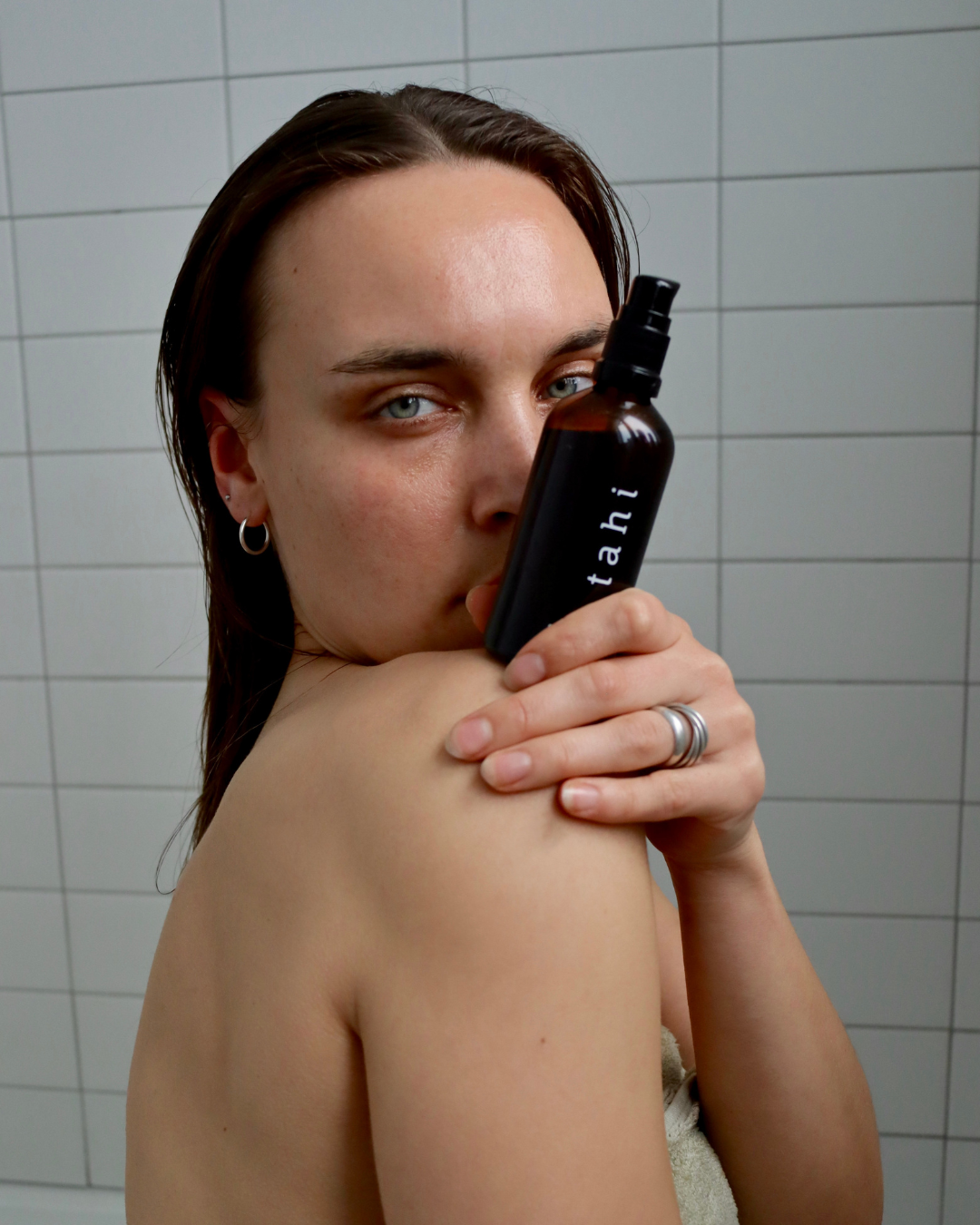
Creative Joelle shares how ritual, nature, and mindful mornings shape her wellbeing — from growing up in the West Auckland bush to carrying small moments of care with her while living abroad. A gen...
Kawakawa is more than an ingredient — it’s a plant deeply woven into the rhythms of Aotearoa. Known for its calming, healing properties and long-standing use in rongoā Māori, Kawakawa offers a gent...