

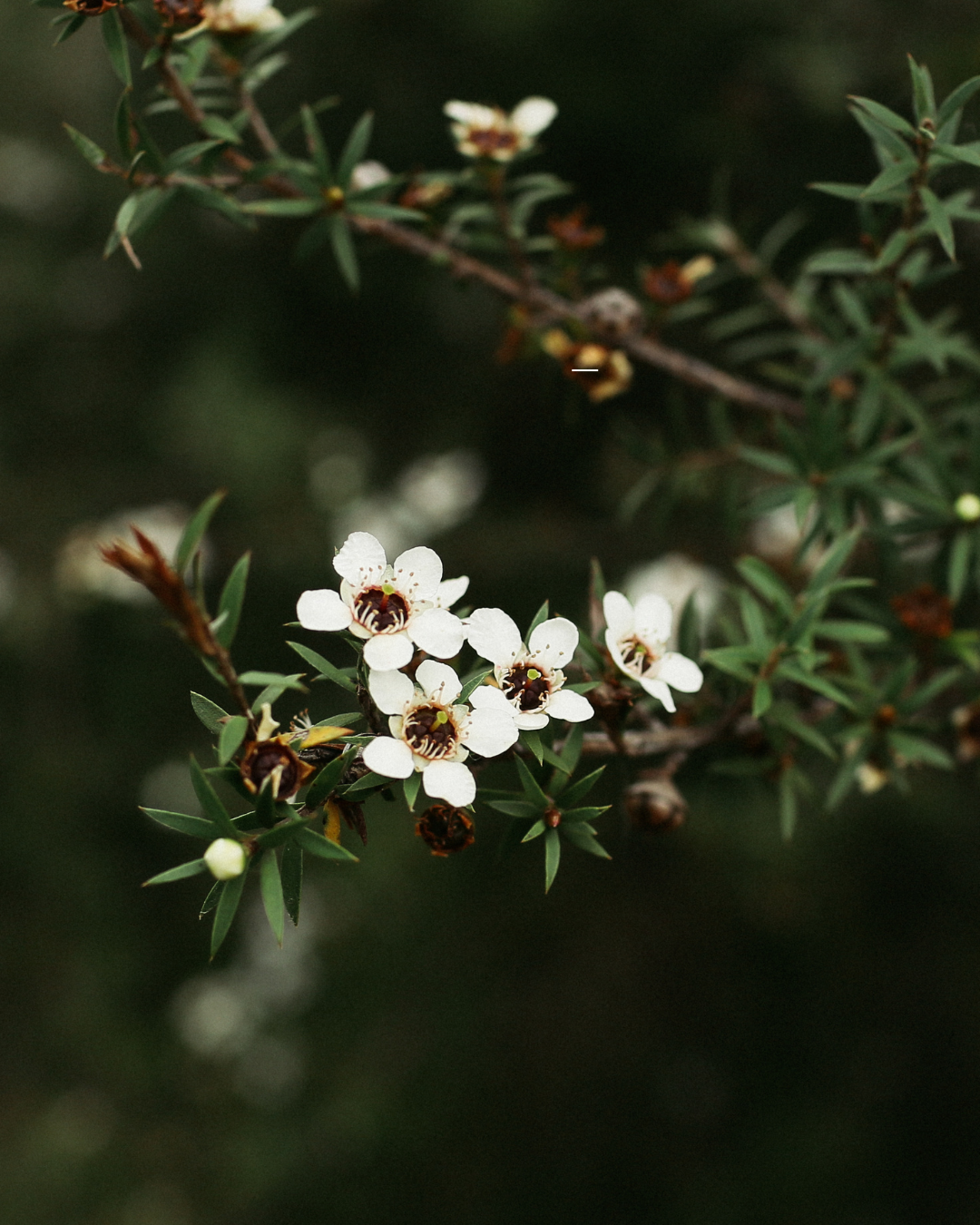
Botanicals & Nature’s Wisdom — Mānuka
A quiet healer of this land
Mānuka is not a trend, and it is not new.
It is a plant that has always been here, rooted in the hillsides, growing wild in places where the soil is poor and the conditions are harsh. Where other plants hesitate, mānuka establishes itself with quiet resilience.
It is often one of the first to return after land has been cleared or disturbed. A restorer and a protector.
In te ao Māori, mānuka is considered a taonga, a treasured plant valued not only for what it does, but for its place within the wider ecosystem and its relationship to people.
Plant, place, and people
Mānuka grows naturally across both the north and south islands of Aotearoa, from coastal areas to inland hills. It thrives in wind, rain, and exposed landscapes, drawing strength from environments that are far from gentle. Often you can spot a manuka tree that has completely morphed into the shape that was caused by the predominant wind in that area, like something out of a dream.
This is part of its nature. And part of its gift.
The potency of mānuka comes from this exact relationship with place. The soil, the climate, the surrounding bush all shape the plant’s properties.
For generations, mānuka has been used within rongoā Māori (traditional Māori healing practices), as a plant of support and restoration. Leaves were infused, bark was used, and oils were drawn out.
This knowledge was not rushed. It was observed over time. Passed down. Made a part of daily life.

A tradition that continues
Today, mānuka is widely known, often spoken about for its antibacterial qualities. But reducing it to a single function would not be missing the holistic power of this lovely shrub.
Traditionally, mānuka has been used to support:
-
Skin healing and repair
-
Inflammation and irritation
-
Wounds, bites, and minor infections
-
Overall balance within the body when used internally
In modern skincare, we are beginning to understand more of why it works. Its natural compounds help calm inflammation, support the skin barrier, and create an environment where the skin can return to balance.
For Tahi, it is important to use both perspectives.
Not just what mānuka does, but how it has always been used.
Supporting the skin, not overriding it
Mānuka does not force the skin to change. It supports it.
This is a subtle but important difference. Rather than stripping or overstimulating, mānuka works in a way that allows the skin to do what it is designed to do, repair, regulate, and restore itself.
For compromised or sensitive skin, this matters.
When used in oil infusions or alongside other native extracts, mānuka becomes part of a wider system of care, one that respects the skin as a living, responsive organ, not something to be controlled.
Honouring knowledge and origin
Using mānuka in skincare carries a responsibility to acknowledge where it comes from.
Rongoā Māori is a living body of knowledge, held within communities and connected to whakapapa, land, and tikanga. It is not simply a resource to draw from, it is something to be respected, protected, and approached with care.
At Tahi, working with native botanicals is not about creating something new. It is about listening to what already exists and ensuring it is carried forward with integrity.

Why it matters where it comes from
Mānuka is unique to Aotearoa. Its potency, its character, and its story are all shaped by this place.
When mānuka is grown, harvested, and processed here, that connection remains intact. The plant is not separated from the land that formed it.
Supporting locally grown and produced botanicals means:
-
Protecting the ecosystems they belong to
-
Valuing the people and knowledge connected to them
-
Ensuring quality, traceability, and care in how they are handled
It keeps the relationship between plant, place, and people whole
A reflection of slow, thoughtful care
Mānuka does not rush. It grows where it is needed, in its own time.
This is something we come back to often.
At Tahi, we believe skincare should not overwhelm the body or heighten the nervous system. It should create space for the skin to function, and for the person using it to slow down.
Mānuka reflects this philosophy naturally. It is steady, grounding, and supportive.
Not a quick fix. A companion.
Returning to simplicity
There is something reassuring about working with ingredients that have been trusted for generations.
Not because they promise instant results, but because they have stood the test of time.
Mānuka reminds us that care does not need to be quick fixes or complicated. That healing can be quiet. And that sometimes, the most powerful ingredients are the ones that have always been here.
We source our manuka essential oil from the East Cape Manuka Company.
Read more

Agata is a facial therapist whose work is grounded in the understanding that the face holds far more than skin alone.
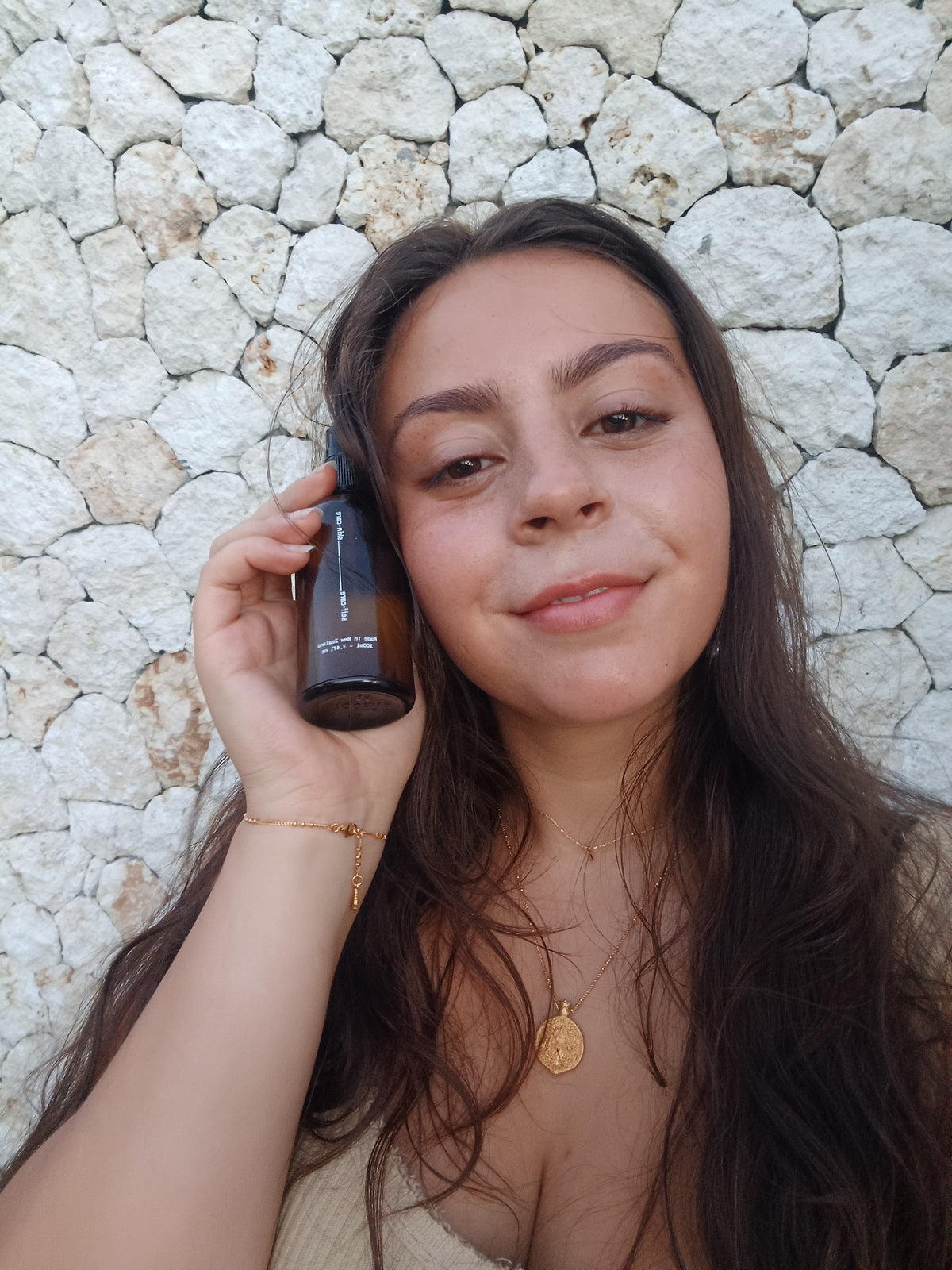
This time, we hear from Lily-Rose, a 19-year-old nanny whose days are filled with early mornings, busy workdays, afternoon swims, and time with family.